

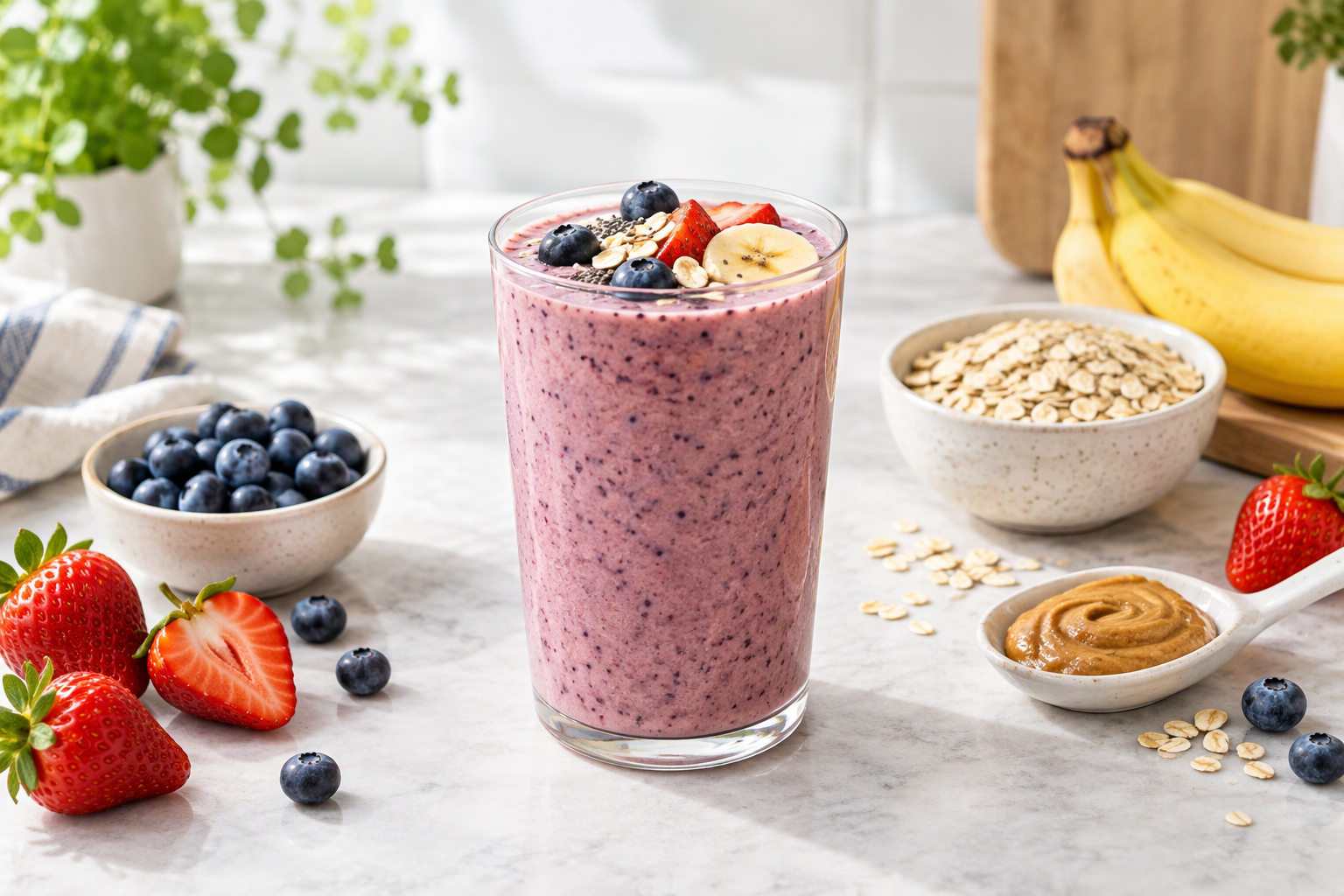

A breakfast smoothie can be quick and nourishing, but it is easy to turn one into a very sweet drink. This balanced smoothie uses plain yogurt, fruit, oats, and nut butter to create a creamy breakfast with protein, fiber, and natural sweetness.
What makes a breakfast smoothie balanced?
A useful breakfast smoothie usually has more than fruit juice and fruit. Pairing fruit with a protein source, a fiber-rich ingredient, and a small amount of healthy fat can make it more satisfying and give it a thicker, more meal-like texture.
This recipe does not promise weight loss or a specific health result. Portion needs depend on your age, activity, health, and the rest of your meals.
Ingredients for 1 large smoothie
- 3/4 cup plain Greek yogurt
- 1 small banana, preferably ripe
- 1/2 cup frozen berries
- 1/3 cup rolled oats
- 1 tablespoon peanut butter or almond butter
- 1/2 to 3/4 cup milk, depending on the texture you like
- 1/2 teaspoon cinnamon, optional
- A few ice cubes, optional
How to blend it
- Add the milk to the blender first. This helps the blades move more easily.
- Add yogurt, banana, berries, oats, nut butter, and cinnamon.
- Blend until smooth. Add more milk a little at a time if the mixture is too thick.
- Taste before adding anything else. Ripe banana and berries often provide enough sweetness without sugar, syrup, or dates.
- Pour into a clean glass and drink it soon after blending.
Why these ingredients are useful
Greek yogurt
Plain Greek yogurt gives the smoothie a creamy base and contributes protein. Choose an unsweetened version when you want to keep added sugar lower.
Fruit
Banana adds body and natural sweetness, while berries bring flavor and color. Frozen fruit can make the smoothie cold without needing much ice.
Oats
Rolled oats add texture and a source of fiber. If you are sensitive to texture, blend a little longer or use a smaller amount the first time.
Nut butter
A spoonful adds richness and helps the smoothie feel more satisfying. Check the label if you need to avoid added sugar, excess salt, or a specific allergen.
Easy substitutions
- Use unsweetened soy yogurt or another higher-protein alternative if you avoid dairy.
- Swap berries for mango, peach, or pear when they are in season.
- Use sunflower-seed butter for a nut-free option, while checking the label for shared-facility warnings if allergies are severe.
- Add spinach for extra color and a mild vegetable flavor. Start with a small handful so the smoothie still tastes enjoyable.
- For a thinner drink, add milk. For a thicker bowl-style breakfast, reduce the milk and add toppings.
Common smoothie mistakes to avoid
Adding juice or sweetened yogurt
These can make the drink much sweeter without adding much staying power. Use milk and plain yogurt as the base, then let fruit do most of the sweetening.
Making the portion too large
A smoothie can contain a lot of energy when several bananas, large spoonfuls of nut butter, and extra sweeteners are added together. Start with the listed amounts and adjust based on your appetite.
Drinking it too quickly
Slow down and treat it like breakfast rather than a quick shot. If smoothies do not keep you full, add a boiled egg, whole-grain toast, or another food that fits your needs.
Food-safety and allergy notes
Wash fresh produce, keep yogurt and milk refrigerated, and clean the blender after use. Do not use ingredients that have spoiled. This recipe contains dairy, peanuts or tree nuts, and oats, so replace ingredients carefully if you have an allergy or intolerance. If you have a medical condition that affects blood sugar, digestion, or food choices, ask a qualified healthcare professional for personal guidance.
Why this recipe is written for real life
The recipe uses ordinary ingredients, gives substitutions, explains the trade-offs, and avoids exaggerated claims. It is based on general balanced-eating principles reflected in public resources such as USDA MyPlate and the Harvard T.H. Chan School of Public Health Nutrition Source. Read labels because products differ in protein, sugar, sodium, and allergens.
Final thoughts
A good smoothie is not about adding every so-called superfood. It is about combining a few ingredients that taste good, suit your routine, and keep you comfortable until your next meal. Start with this version, then adjust the fruit, thickness, and toppings to make it yours.
Editorial note: This article was prepared for Kainat Journals on November 21, 2026. It is general food information, not medical advice.
Frequently asked questions
Can I prepare this smoothie the night before?
It is best fresh, but you can prepare the ingredients in a covered container and blend them in the morning. If you blend ahead, keep it refrigerated and expect the texture to become thicker.
How can I make it less sweet?
Use half a banana, choose berries instead of mango, and avoid sweetened yogurt, juice, honey, and syrup. Cinnamon can add warmth without adding sugar.



Join the conversation